
Stinging Insects
Vector Significance
- Although capable of stinging, these species are not known to transmit disease to humans or pets
- Reactions to stings can vary from short-term discomfort to substantial pain
- Reactions such as swelling, tenderness, and itching, to life-threatening allergic responses can occur
Vector Control Services
- Vector control biologists can identify the species of stinging insects and help determine risk
- Depending on the level of public health risk, remove or treat stinging insect nests
PLEASE NOTE: Insects inside buildings (walls, attics, or foundations) are not serviced by the District, and you are advised to contact a professional pest management company.
Requesting Services
What can the public do?
- Since all the insects on this list are important pollinators, use of insecticides is discouraged unless the insects are posing an immediate threat to safety
- Sealing openings (cracks, holes, and gaps) can prevent nests in structures
- As a last resort, wasp sprays or pesticide dust may be used
Varieties of Stinging Insects
Yellow Jackets
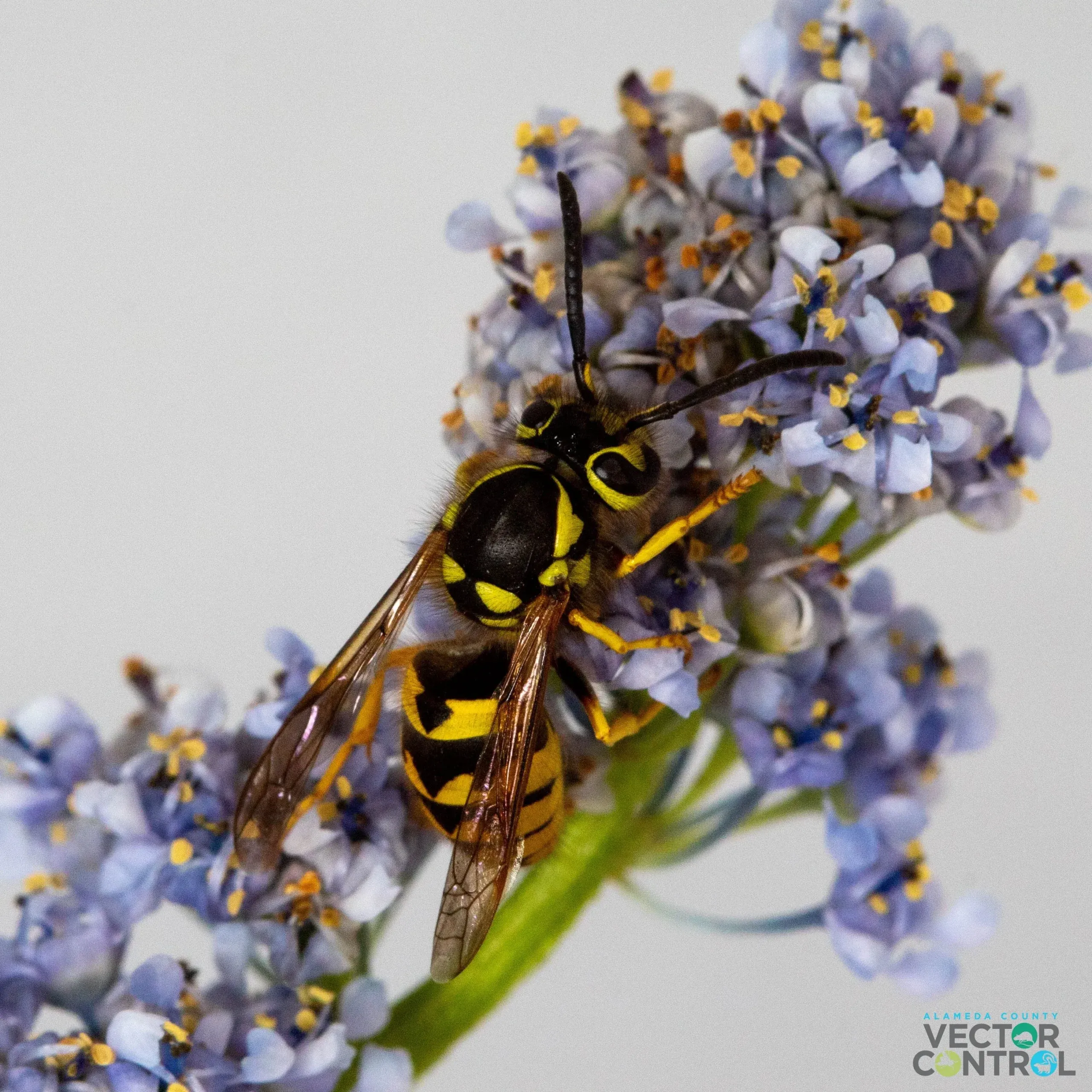
Yellow jackets are medium sized wasps about half an inch long. Their bodies are black with distinctive bands of bright yellow on their abdomen. They have a lance-like stinger and can sting repeatedly when attacking a perceived threat. A large nest consists of a queen and up to thousands of workers, with the nest growing in numbers as the warmer seasons progress. Most nests die off each winter and the overwintering queens begin the spring constructing a new nest and hatching a new brood of worker yellow jackets. Ground nests are most common, but they can be found in wall cavities and other void areas of a house. Some species will build an aerial nest that hangs freely from tree limbs or other high places.
Paper Wasps
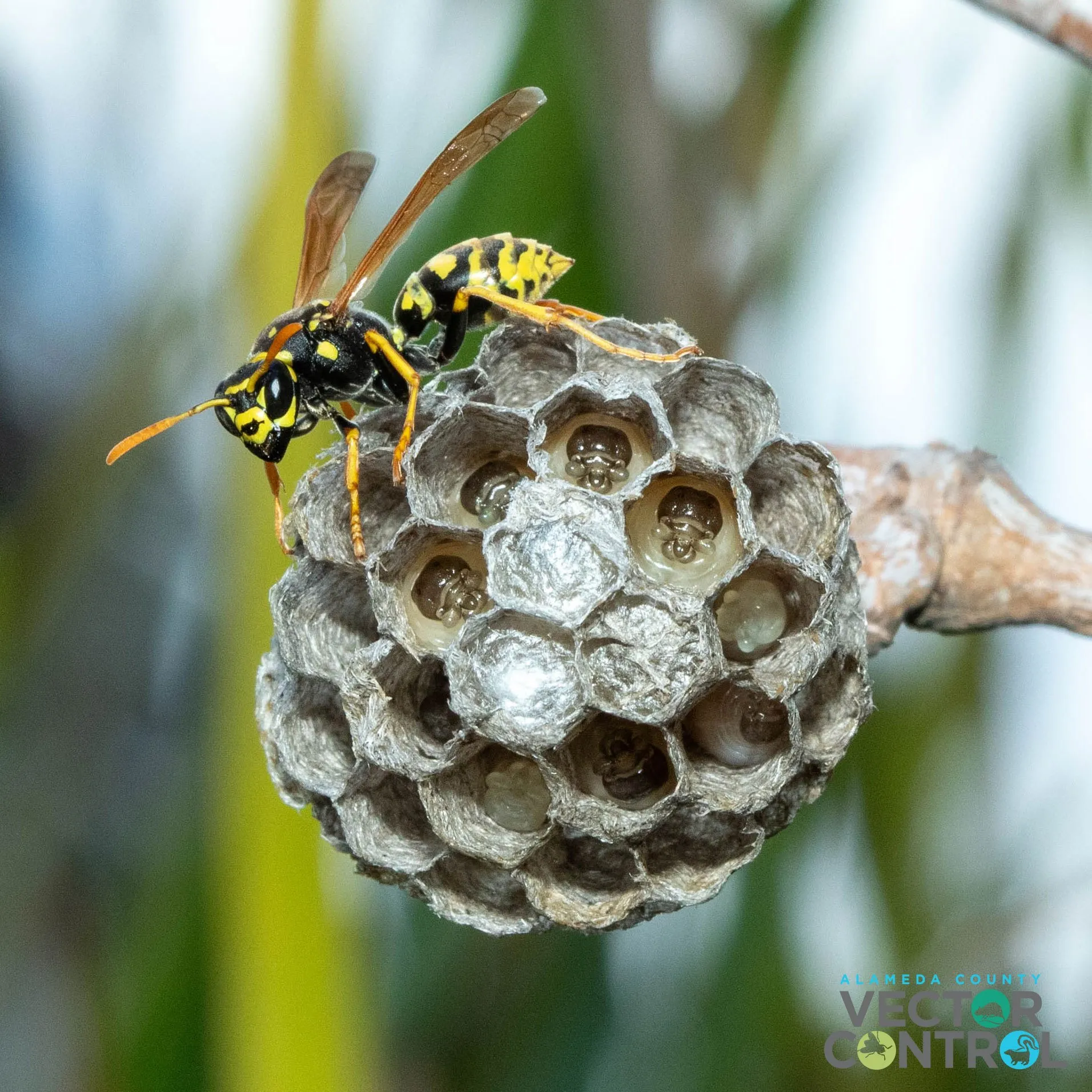
The most common species in Alameda County is the European paper wasp, Polistes dominula. They are similar in appearance to yellow jackets but are larger, slimmer and have yellow legs and antennae. Unlike yellow jackets, they dangle their legs while flying. Their nests are constructed from wood pulp, hence the name “paper wasp”, and are usually found under eaves or sheltered patio areas. Paper wasps are less aggressive than yellow jackets, but they can sting. Newly forming paper wasp nests can be removed with a strong stream of water from a garden hose or knocked down using a long pole.
Honey Bees
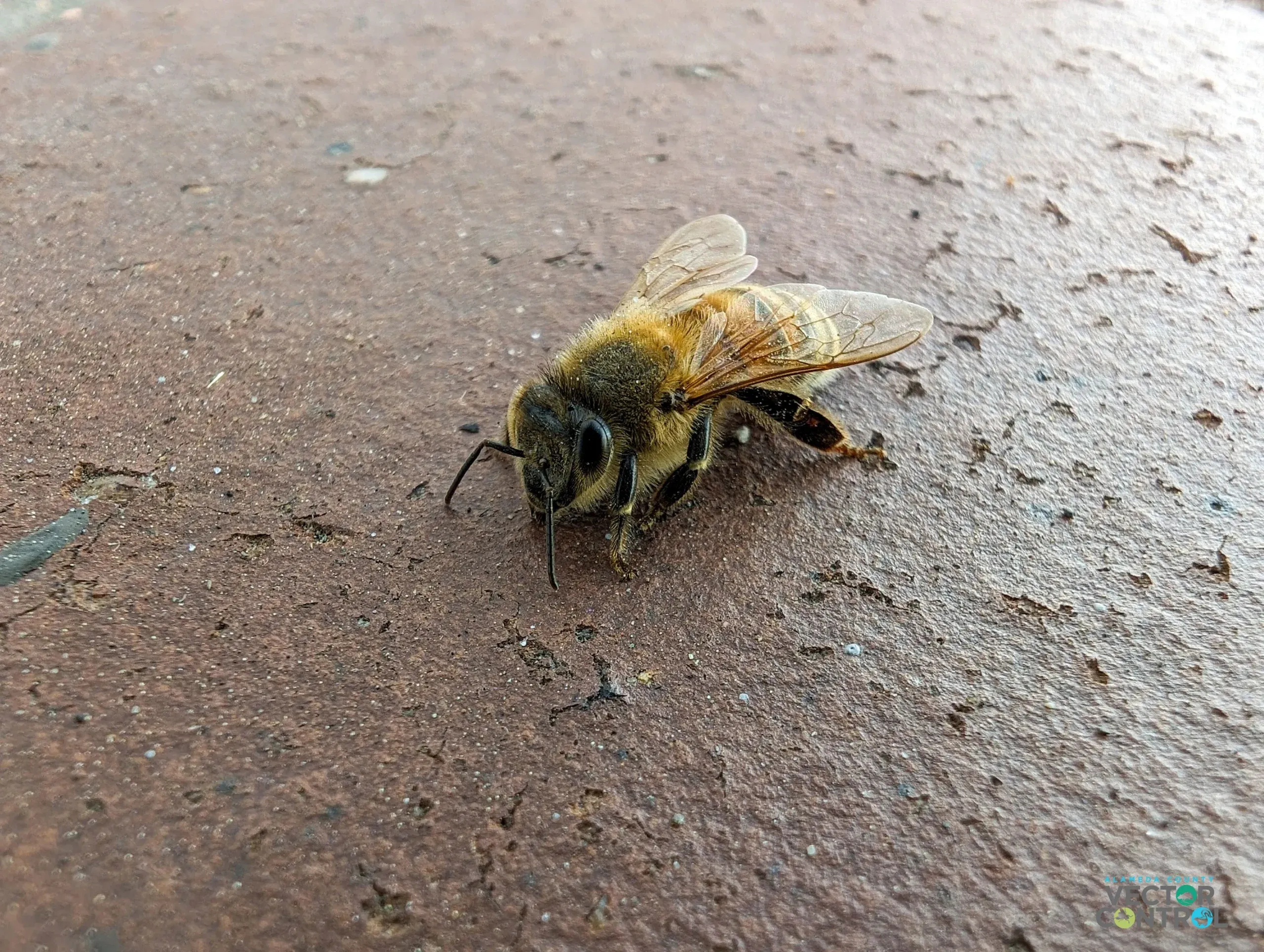
The Western honeybee (Apis mellifera) is the most common honeybee species in the world. They are known to form large colonies containing a single reproductive female known as the “queen”. Worker bees (also females) pollinate plants and produce honey to sustain their hives throughout the cooler seasons. Honeybees play a critical role in the ecosystem by pollinating many agricultural crops and native plants.
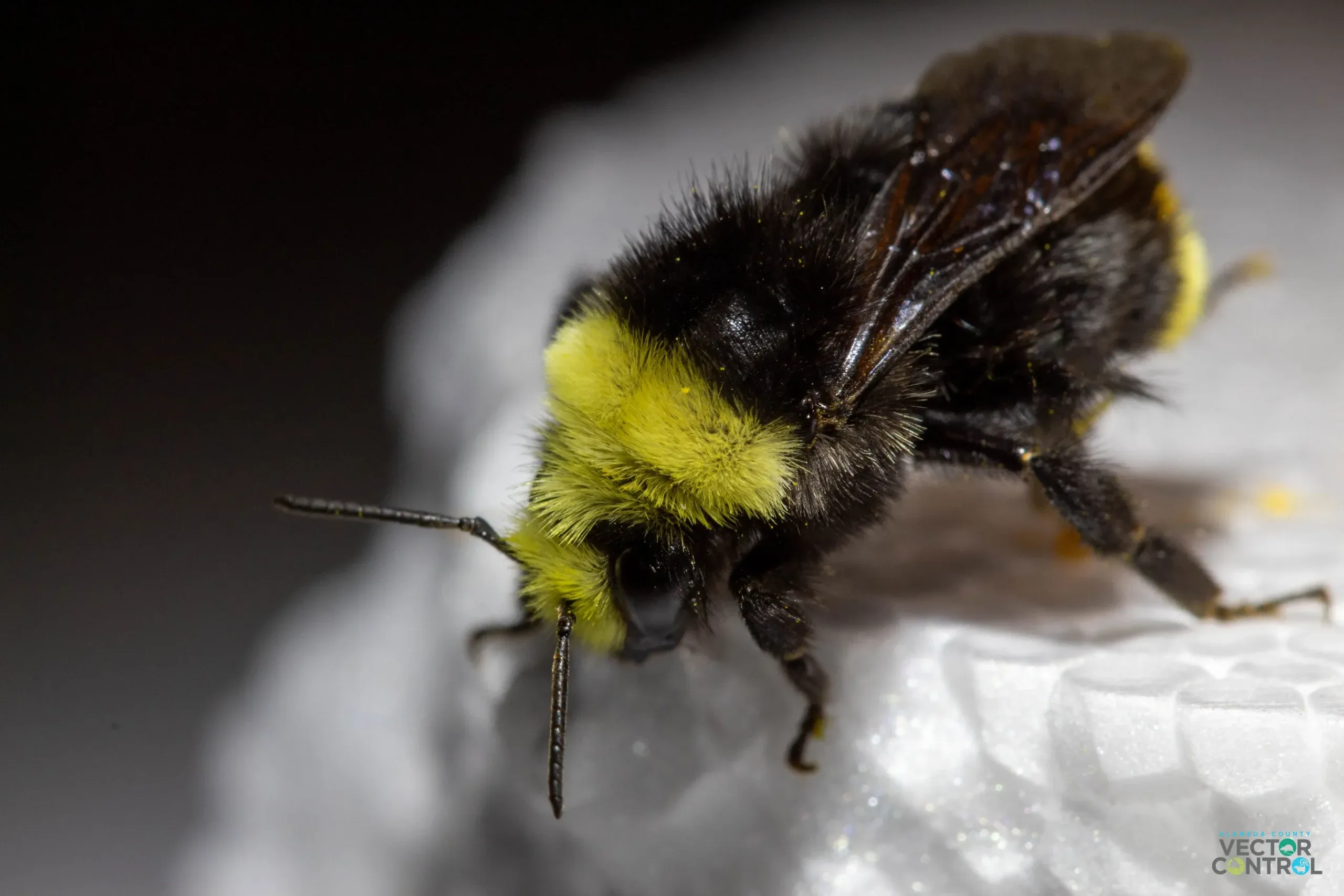
Bumble Bees
Bumble bees are larger than honeybees, measuring ¾ to one inch long and are usually fuzzy. Most species form colonies and they typically build their nest in ground cavities, but some are found in wood piles, walls, sheds, or crawl spaces. The most common species of bumblebee in Alameda County is the yellow-faced bumblebee, Bombus vosnesenskii. They can become aggressive and sting when their nests are disturbed but are docile while foraging. Please contact the Vector Control Services District and consult with one of our Biologists before deciding to destroy a bumble bee nest.

Carpenter Bees
Carpenter bees are similar in size to bumblebees, but less hairy. They make nests by creating tunnels in various types of wood, including structural timber, fence posts, and telephone poles. The most common species in Alameda County is the valley carpenter bee, Xylocopa sonorina. Females are completely black, and males are fuzzy and yellow. These bees are unlikely to sting unless provoked and are more docile than yellow-faced bumblebees. Carpenter bee nesting can be discouraged by painting over the wooden surfaces.