Home / Programs & Services / Wildlife / Raccoons
Raccoons
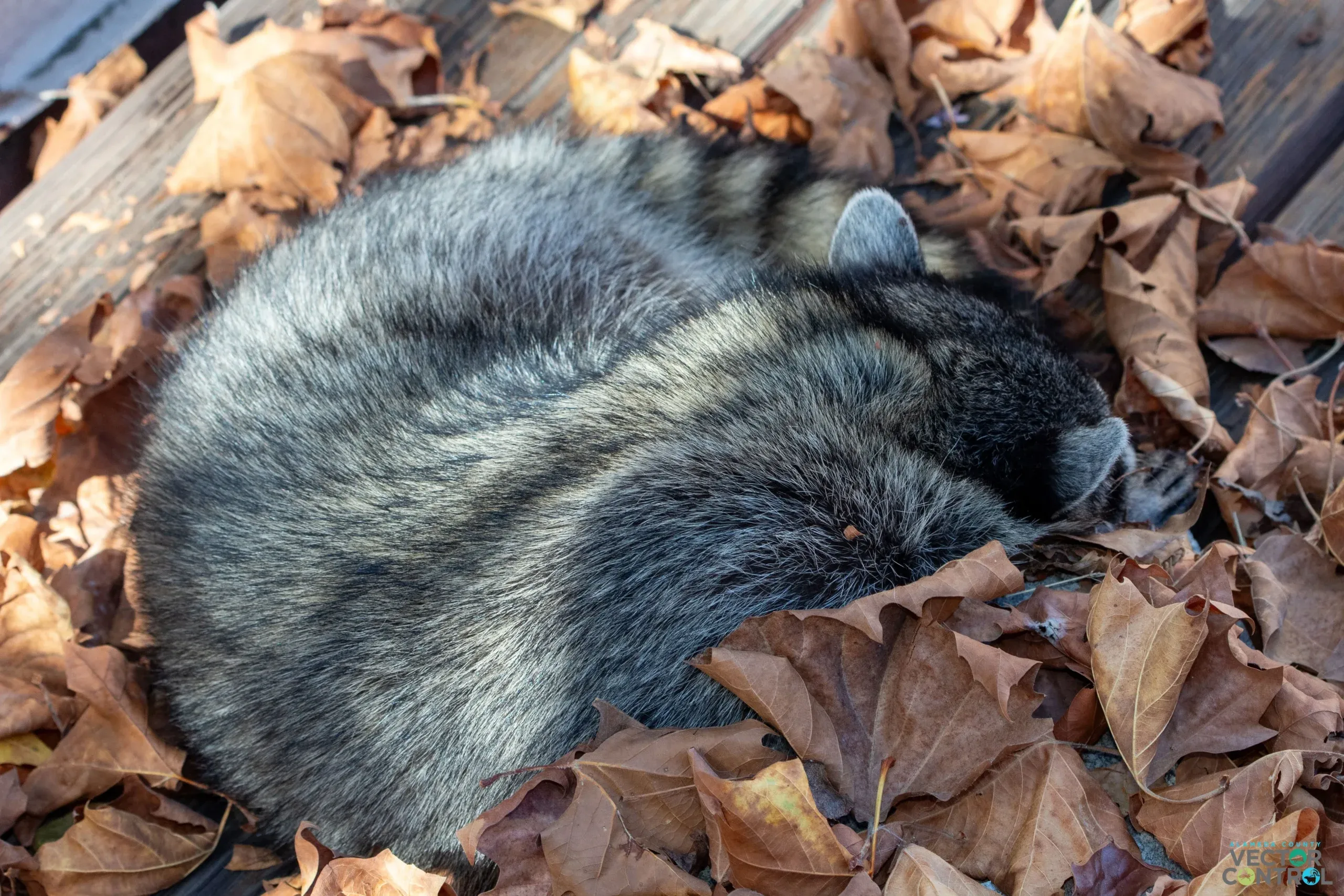
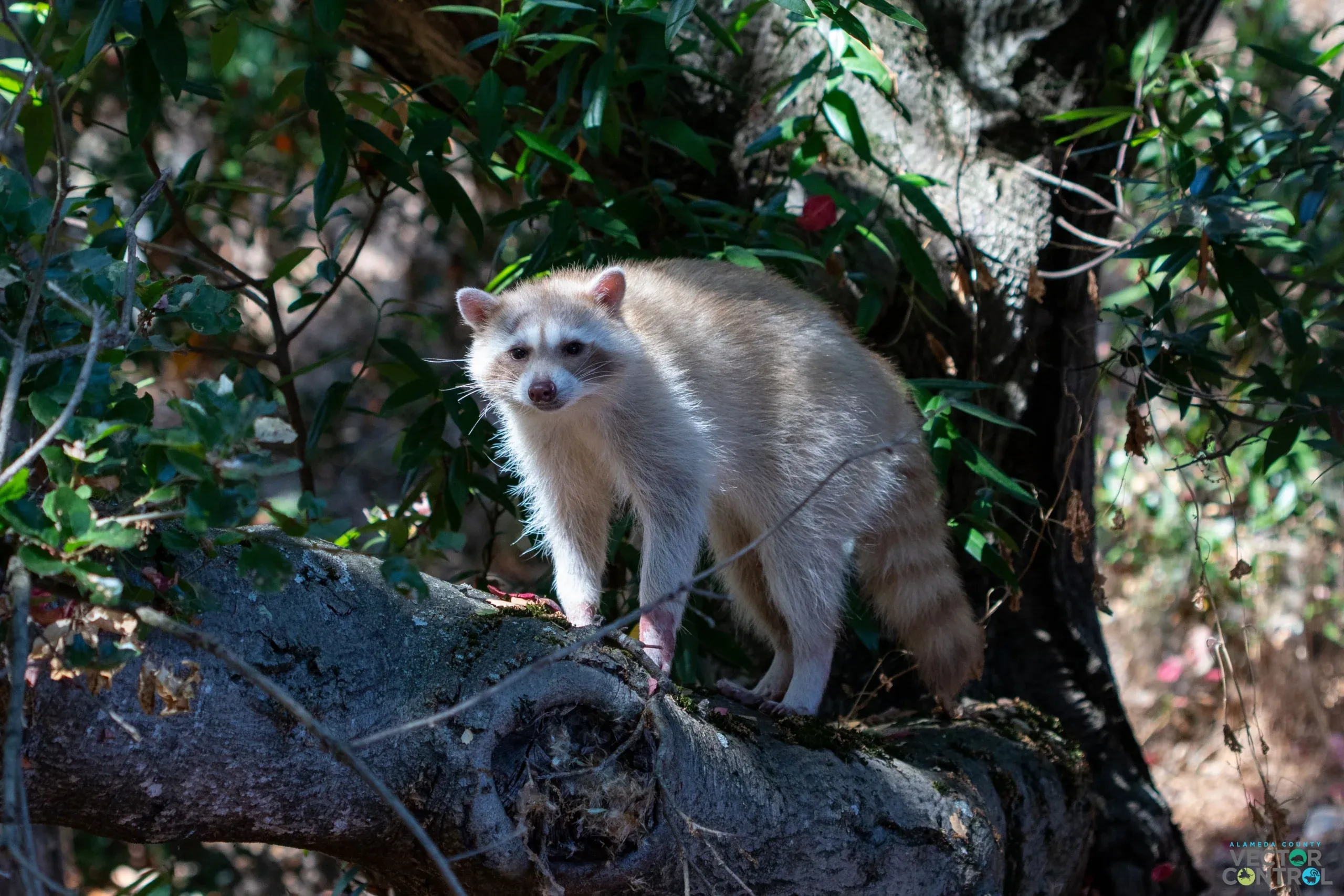
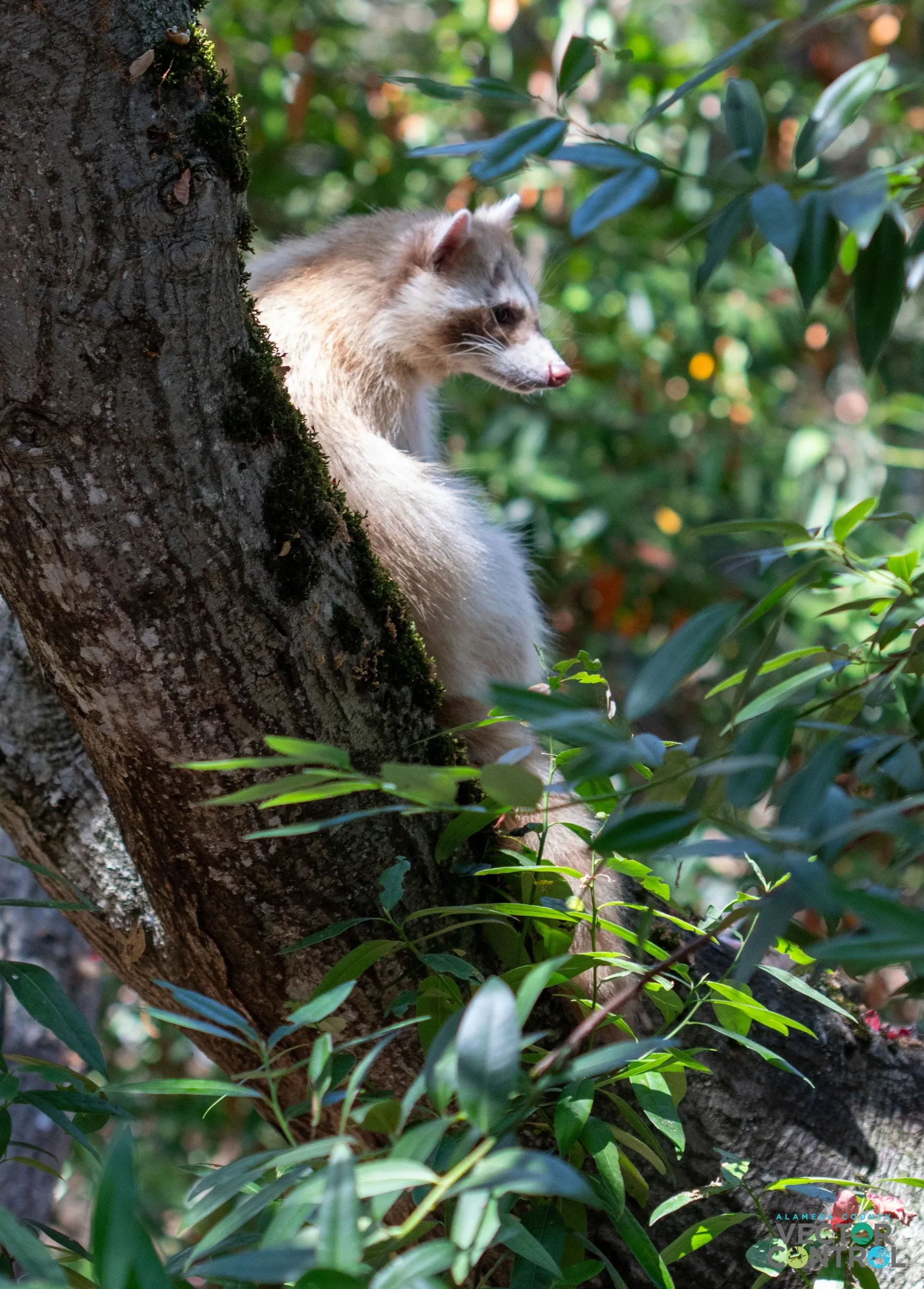
Native to North America, the common raccoon (Procyon lotor) is an omnivorous, nocturnal mammal commonly encountered in Alameda County. Raccoons are characterized by a black “mask” over their eyes, and alternating light and dark rings around their tails. They live in small burrows in the ground, in trees, rock crevices, or storm drains. They are very intelligent and adaptable and thrive in both urban and suburban areas. Problems arise when these animals gain access to attics and crawl spaces, increasing the likelihood of a human-wildlife encounter.

Vector Significance
- Raccoons are susceptible to the rabies virus, although a rabies positive raccoon has never been detected in Alameda County
- Canine distemper is a disease that can affect raccoon populations as well as other wildlife and unvaccinated domestic dogs
- Raccoons urinate and defecate in the same location, creating a latrine
- The feces from a raccoon latrine may contain the eggs of a parasitic roundworm that can be accidentally ingested or inhaled, causing sickness
- If they have established a latrine in an attic, the urine and feces may cause structural damage and a foul odor
- Raccoons host several ectoparasites, including the cat flea
- If a raccoon gains access to an attic or crawl space, these areas may become infested with these fleas
- Raccoons can cause damage to homes when they remove foundation doors and screens, roofing material, or siding
- Raccoons engage in a behavior called grubbing, digging into and damaging lawns and landscaped areas in search of beetle grubs
Vector Control Services
- Confirm the type of animal that may be present
- Identify if you have a raccoon latrine on your property
- Offers inspection of properties and determines where a raccoon may have entered the building
- Gives recommendations on ways to modify the environment to make it less attractive to wildlife
- Assists in excluding the raccoon from a structure without harming it or its offspring
Requesting Services
If you are interested in our services and want to request inspection, click the button below:
What can the public do?
- Never feed a raccoon and do not approach or corner the animal
- Do not leave food or water outside overnight, including pet food
- Pick up fallen fruits and harvest vegetables as soon as possible
- If you locate a raccoon latrine on your property, please refer to the CDC guidelines below on sanitation
- Treat lawns during the summer months for grubs
- For dead raccoons, refer to your local Animal Control agency
Raccoons