Home / Programs & Services / Invertebrates / Ticks
Ticks
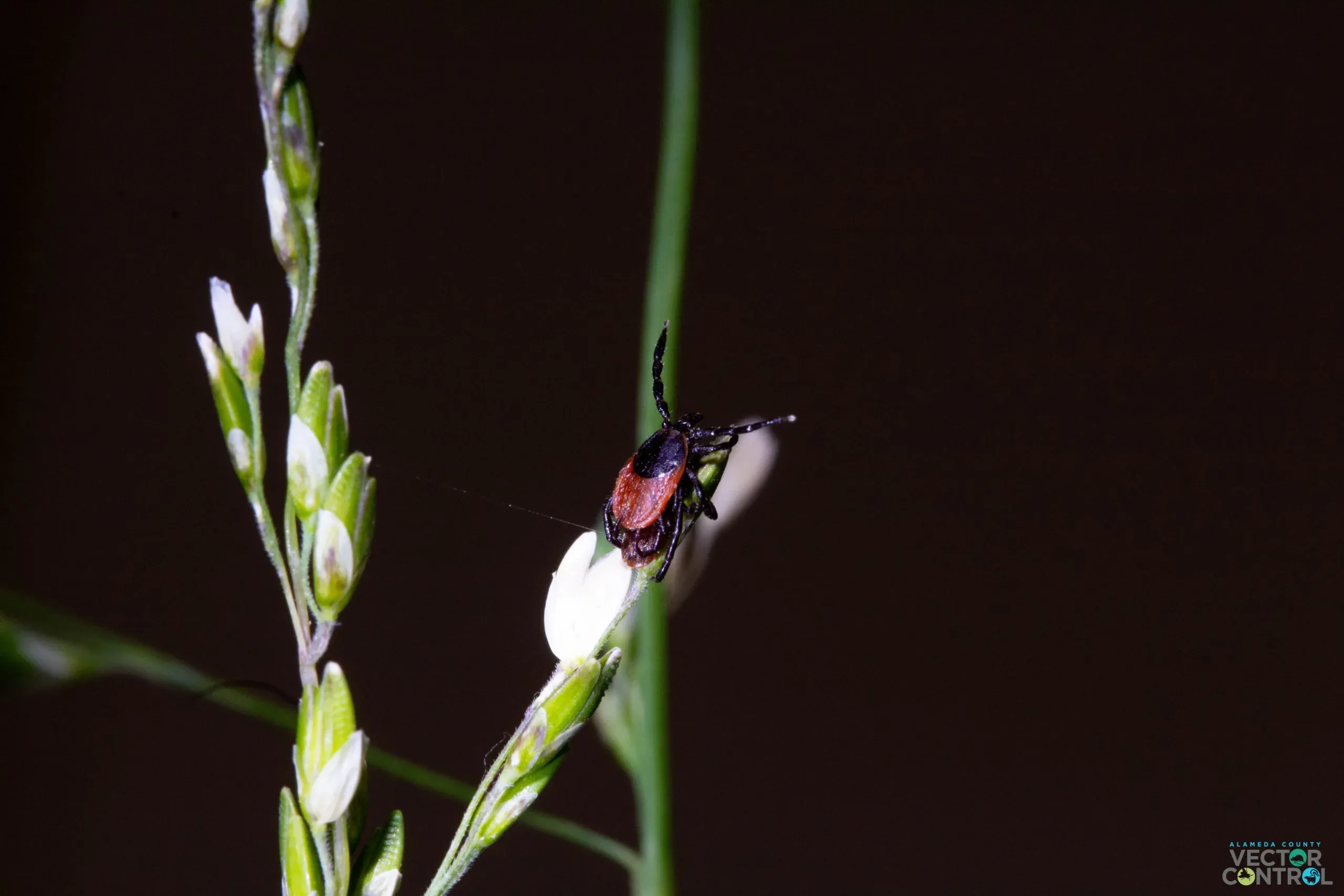
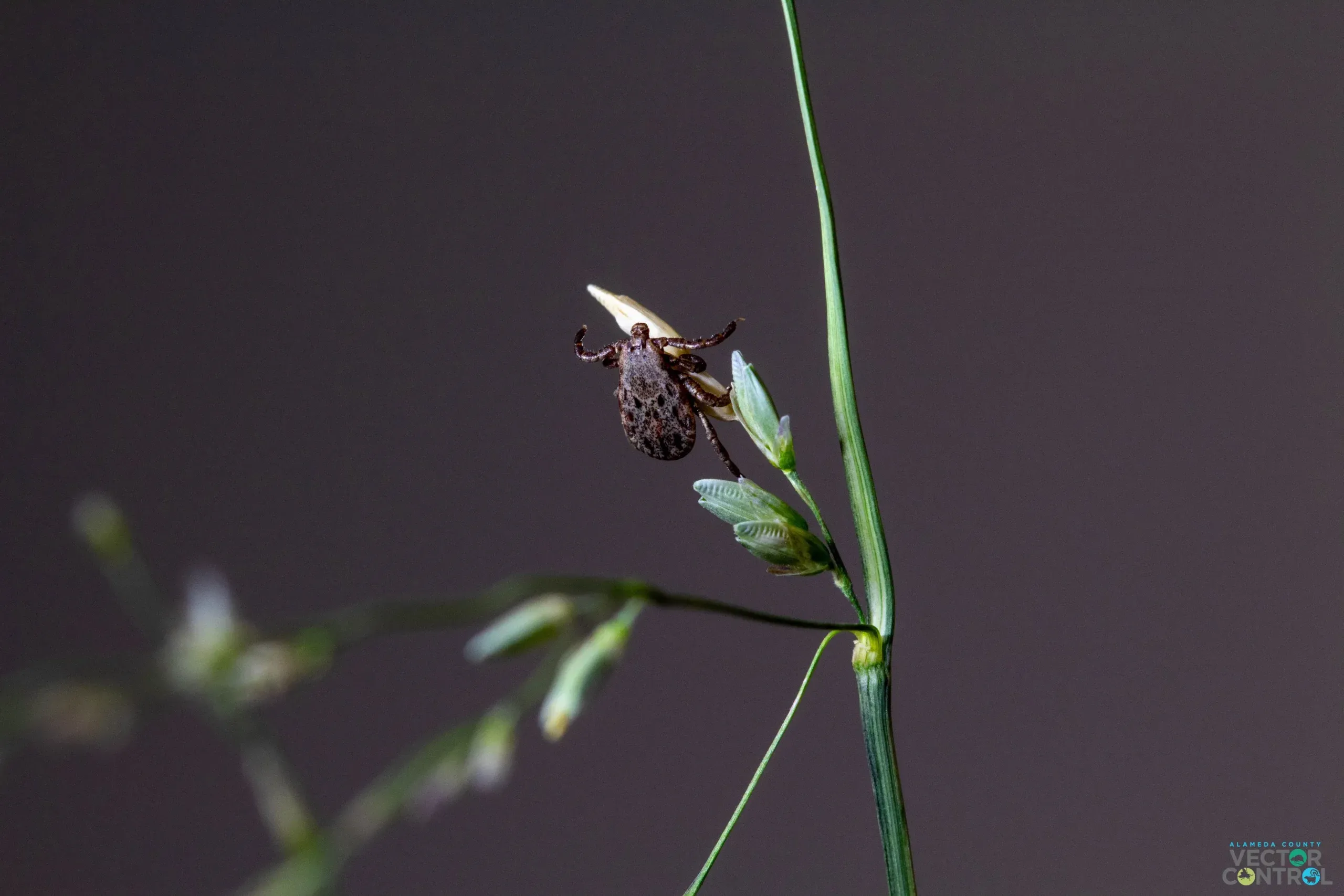
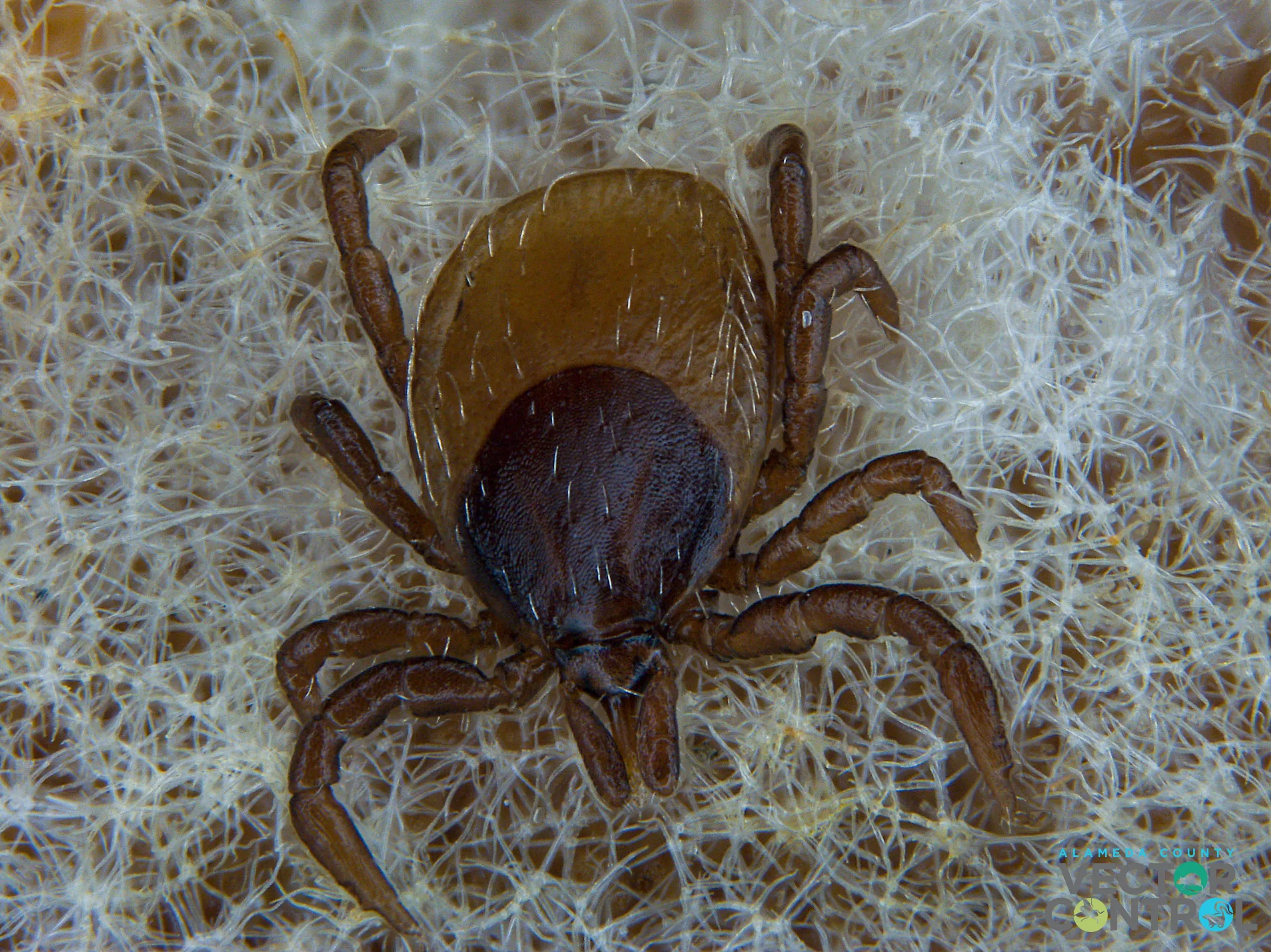
Ticks are small parasitic arachnids that feed off the blood of mammals, birds, reptiles, and amphibians. They undergo four life stages: egg, larva, nymph, and adult, and a blood meal is required to advance to the next developmental stage. There are three common ticks that bite humans in Alameda County: The Western Black Legged tick (Ixodes pacificus), the Pacific Coast tick (Dermacentor occidentalis), and the American Dog tick (Dermacentor similis). Adult ticks look for hosts by perching themselves on overhanging grasses and branches at the edges of trails. Immature ticks are most often found in leaf litter, on wood piles, or mossy rocks.
Vector Significance
- Ticks can transmit several infectious diseases that affect humans
- The occurrence of tick-borne illnesses in humans is increasing worldwide
- The Western black legged tick is the main vector of Lyme disease
- The Pacific Coast tick is the main vector of Pacific Coast tick fever and tularemia
- The American dog tick is the main vector of Rocky Mountain spotted fever and tularemia
Vector Control Services
- Vector Control can identify the species of tick
- Vector Control can make recommendations on how to limit exposure to ticks in and around your property
- Vector Control Biologists routinely conduct tick-borne pathogen surveillance in regional parks and open spaces throughout the County
- Alameda County Vector Control District does not test ticks that have been removed from humans or pets
- The following agencies and companies will test these ticks for a fee:
- Solano County Public Health Laboratory Solano County – Tick Testing (Lyme Disease)
- Santa Clara County Public Health Department Test ticks for Lyme disease | Public Health | County of Santa Clara
- Sonoma County Public Health Regional Laboratory Lyme Organism in Ticks
- Bay Area Lyme Foundation Tick Testing – Bay Area Lyme Foundation
- Connecticut Veterinary Medical Diagnostic Laboratory How to Submit a Tick | Connecticut Veterinary Medical Diagnostic Laboratory
- IGenex Tick Test | Send Ticks for Testing | IGeneX
- TickCheck TickCheck Tick Testing – Laboratory Tick Testing Services for Lyme & Tick-Borne Diseases
Requesting Services
If you are interested in our services and want to request inspection, click the button below:
What can the public do?
- Always hike in the center of the trail
- Avoid walking in areas with heavy leaf litter
- Use insect repellent before you go hiking
- In areas with high tick populations, do not sit on logs or rocks
- Check yourself, pets, and gear for ticks immediately after hiking
- If bitten by a tick, removing it within 24 to 36 hours will help reduce the risk of pathogen transmission
- Keep the removed tick in alcohol so it can be identified by Vector Control staff or a professional entomologist
Ticks